Planning Your First Trip to Australia: An Expert Question and Answer

Get inspired to plan your trip to Australia with our travel expert David, who reveals his insider tips and recommendations to discovery this enormous country for the first time.

Australia is among the world’s most intriguing destinations, with a wealth of cultural diversity, natural wonders and iconic attractions – from the Sydney Opera House to the Great Barrier Reef. With so many choices, planning your first trip here can feel overwhelming. That’s why we’ve asked one of our in-house experts to share his top tips for a first-time trip to Australia.
Meet David D’Arcy, a Jacada senior travel designer who’s spent several years living in Australia. His time in Melbourne, the Outback and Kangaroo Island gave him unique insights into the various sides of this vast country, while his interests in culture, cuisine and outdoor exploration inspired him to travel far and wide.
We sat down with David to chat about his experiences and recommendations for travellers planning their first Australian adventure.

How big is Australia?
Australia is huge! The country covers around 7.7 million square kilometres (nearly 3 million square miles), making it the sixth-largest country in the world. To give you an idea, it’s bigger than all of Europe (excluding Russia).
For first-time travellers, understanding this scale is essential. Journeys that look close on a map can actually take hours, for example:
- Sydney to Melbourne: around 1.5 hours by plane or 9 hours by car.
- Sydney to Perth: over 4 hours by plane or several days by car.
- Cairns to Uluru: around 3 hours by plane.
This size makes Australia so diverse, but it also means thoughtful planning is key to balancing highlights with realistic travel times.
Learn more with David
I find it especially useful to discuss the size of Australia when planning with first-time visitors. Understanding the scale of the country is crucial as we start mapping out the experience. To keep things balanced, two or three regions are usually enough to give variety without too much travel.
We’ll then design a completely bespoke itinerary around what you want and how far you’d like to go during your trip.

What are the different regions of Australia?
Australia is made up of six states: New South Wales, Queensland, Victoria, South Australia, Western Australia and Tasmania. Then there’s the Northern Territory, home to the Red Centre.
Each region is quite large, with lots of different reasons to visit. For instance, New South Wales is where you’ll find Sydney, but also the Blue Mountains and the Hunter Valley wine region. Queensland has the Great Barrier Reef, but also the Daintree Rainforest and the Whitsundays.


What are the best cities to visit in Australia?
I have a soft spot for Melbourne, where I used to live. The city is considered the cultural capital of Australia and has loads of fantastic restaurants, cafés, art galleries and museums. Sydney is also a must-visit, not just for famous landmarks like the Opera House and Harbour Bridge, but also to learn about its Aboriginal and colonial history.
And then there are smaller cities like Brisbane and Adelaide – both of which are beautiful – plus plenty of others, from Perth to Cairns.


Which places would you recommend on a first visit?
There are so many places to visit in Australia, but for a first journey I definitely recommend a balance of cultural landmarks and natural wonders:
- Uluru and Kata Tjuta (Northern Territory): both hold immense significance for Aboriginal communities and visiting them is a deeply spiritual experience.
- Great Barrier Reef and Daintree Rainforest (Queensland): two World Heritage Sites side by side, perfect to combine in one trip for snorkelling, diving and guided rainforest walks.
If you have more time, you can also visit some of Australia’s islands. The Whitsundays are spectacular, with incredibly white sand and turquoise waters. Kangaroo Island is ideal for wildlife and nature lovers, and Lord Howe Island offers remoteness, hiking and rich marine life. Tasmania is so diverse that it’s worth a dedicated trip on its own, with wilderness, food and culture all to discover.

Can you travel Australia by train?
Absolutely. There are some amazing luxury train journeys across Australia:
- The Ghan: runs between Adelaide and Darwin, passing through some of the most remote parts of the Outback.
- The Indian Pacific: crosses east to west between Perth and Sydney and includes the world’s longest straight railway track.
Both offer a wonderful way to see as much of the country as possible within just a few days, and without taking any flights.

Are cruises a good way to explore?
Yes, there are several cruises around different parts of Australia which give you the chance to explore remote coastlines and islands:
- True North: designed to navigate the rivers of the Kimberley region, taking you to its most remote spots.
- Odalisque III: based in Tasmania, offering multi-day cruises around the island.
Both provide access to areas that are otherwise difficult to reach, while combining comfort with adventure.

Can you tell us about Australia’s culture and history?
Aboriginal Peoples have been living in Australia for a very, very long time – at least 65,000 years [National Geographic]–, making their culture one of the oldest continuous traditions in the world. There are hundreds of different Indigenous groups with their own languages and customs, many of which have been maintained and preserved.
Whenever possible, I recommend experiences with Aboriginal guides that allow you to learn more about these cultures’ heritage and support local communities. For example, in Western Australia you can go on a bushwalk led by a Wadandi custodian who will teach you about their community’s spiritual beliefs, traditional healing methods and connection with nature.
You can also learn about Australia’s more recent history as a British penal colony, particularly in New South Wales and Tasmania. The Port Arthur Historic Site is especially interesting.
Expert insight from David
Cultural and historical tours will allow you to go deeper into Australia’s stories and traditions. Families often prefer cultural experiences that are more activity-based – things like wildlife encounters, snorkelling or guided bushwalks, where children can engage directly with nature.


What is Australia’s best-kept secret?
For me, Tasmania is Australia’s best-kept secret. This island is located off the southern tip of the country, just a short flight from Melbourne. It’s full of stunning wilderness, multi-tiered waterfalls and unique wildlife like Tasmanian devils. Some of Australia’s best national parks are here, including Tasman National Park and Freycinet National Park. The main city, Hobart, is full of history and cutting-edge culture, with phenomenal restaurants, wineries and museums.
Do you have any favourite hotels in Australia?
I do have some favourites that stand out for their settings and experiences:
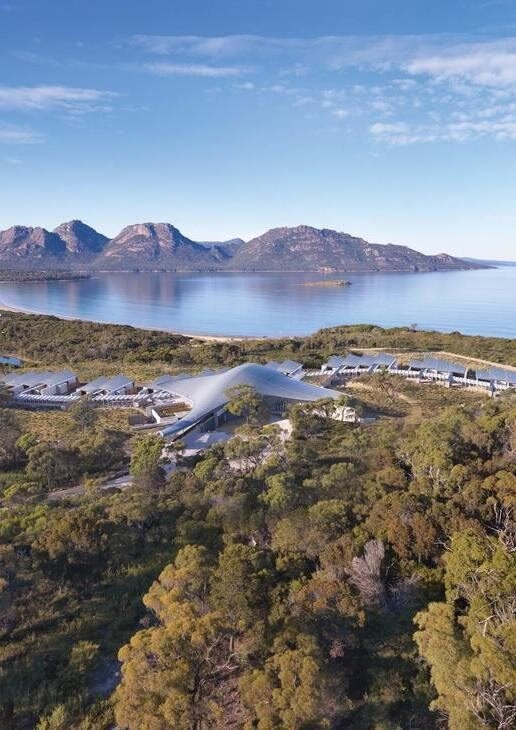
- Saffire Freycinet (Tasmania): one of the most beautiful lodge settings in the country, overlooking Coles Bay and Freycinet National Park.
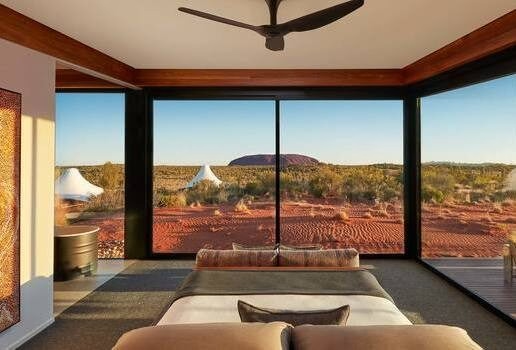
- Longitude 131º (Red Centre): luxury tents with direct views of Uluru from your own tent.
- Lizard Island (Queensland): one of the best island resorts around the world, especially if you want to go diving in the Great Barrier Reef or just enjoy the beach.

Do I need a visa to visit Australia?
Unless you’re a citizen of Australia or New Zealand, you’ll need a visa to enter the country. Most travellers can apply online using the ETA (Electronic Travel Authority) app, which makes the process straightforward. The local currency is the Australian dollar; you can withdraw cash at ATMs, but most payments will be made by card.
For first-time or returning visitors, it’s always best to check with the Australian consulate in your country, as entry requirements may change.
What should I pack for my trip?
If you’re travelling around Australia, be prepared for long distances and changing conditions – remember, it’s a big country! Packing well will make your journey much more comfortable:
- Layered clothing is useful if you’re visiting multiple regions where temperatures vary.
- Outdoor gear, such as sturdy shoes for walking or hiking, swimwear for beaches and reefs and any specialist equipment for activities you’ve planned.
- Sun protection, a hat and sunglasses are essential year-round.
- Travel comforts, including books, headphones or snacks for long drives and/or flights.

When is the best time to visit Australia?
This completely depends on your itinerary, but overall Australia is a year-round destination. If you want to visit the Top End or northwestern Australia, the dry season from around June to October is the best time to go. For South Australia and Melbourne, I suggest spring (September–November) or autumn (March–May). If it’s your first time visiting, I usually recommend one of these two shoulder seasons for the best combination of smaller crowds and good weather across the country.
Sydney is one of my favourite places to visit especially during big celebrations like New Year’s Eve and Mardi Gras, which fall within the southern hemisphere’s summer. There’s also the annual Vivid festival in winter, which is one of the coolest things to do in Australia. It’s always a good idea to book at least a year in advance if you want to catch one of these events, especially if it’s your first trip.
I’d also recommend checking out our guide on when to visit Australia for more details about each season and specific destinations.
More ways to explore Australasia
We usually recommend experiencing Australia on its own, especially if it’s your first trip – the country is so vast that even a couple of weeks only scratches the surface. But for return travellers, adventurers with more time or those who want a taste of both, Australasia can be explored together. Our example itinerary shows how Australia and New Zealand fit side by side in one incredible journey.
And if you’re focusing only on Australia, our experts have a curated guide on the best places to visit. It’s a great way to spark ideas and start shaping your adventure.