The Ultimate Guide to the Great Wildebeest Migration
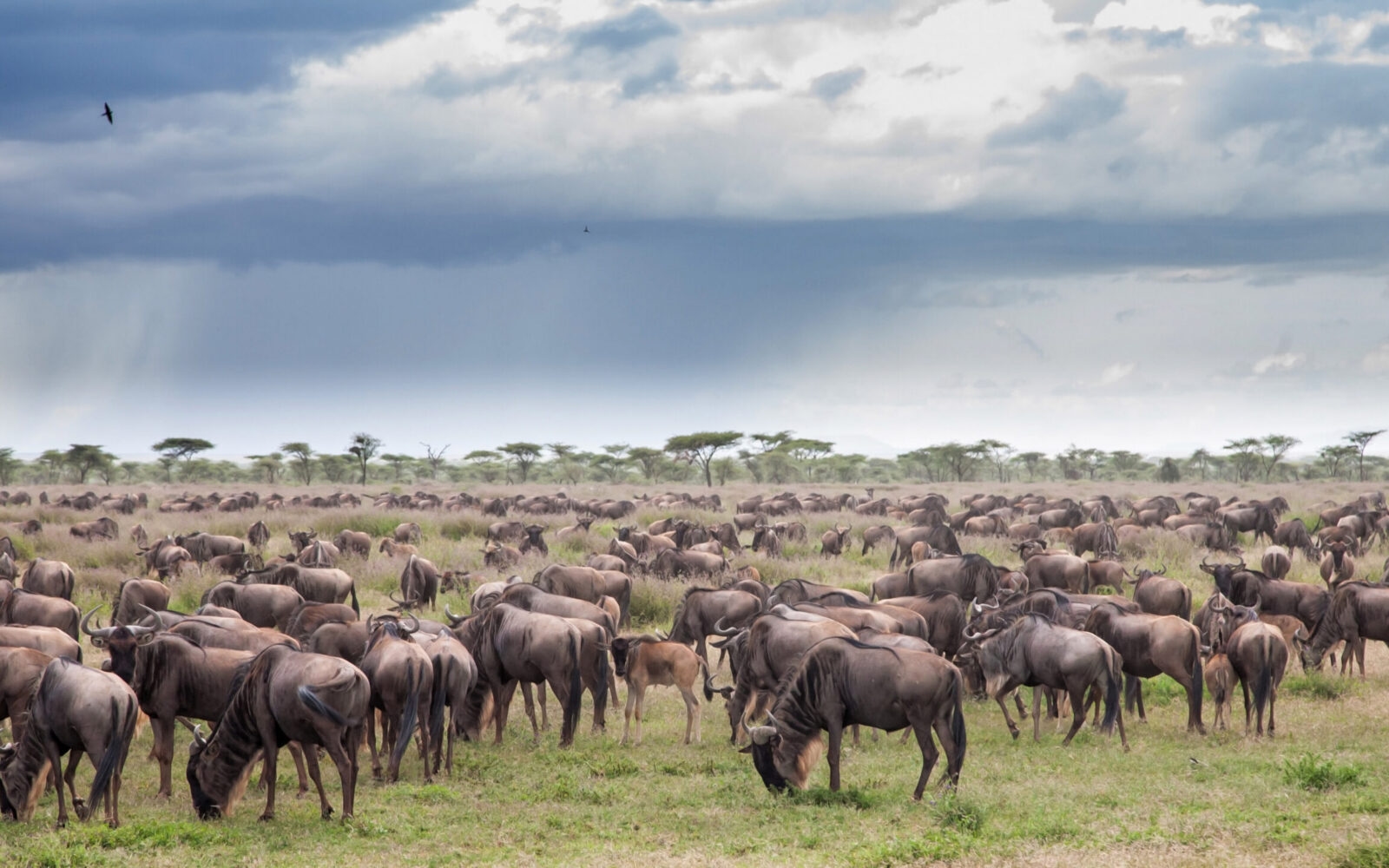
Throughout the year, huge herds of wildebeest, zebra and antelope, travel around the Serengeti in Tanzania and into the Maasai Mara. The animals follow the pattern of the rains, avoiding the waiting predators as they go. We’ve collected everything you need to know about what the Great Migration is, where it takes place, when it can be seen and how you can plan your Great Wildebeest Migration safari with us.

What is the Great Wildebeest Migration?
The Great Wildebeest Migration is the annual movement of millions of wildebeest, zebras, Thomson’s gazelles, Grant’s gazelles and other antelopes between Tanzania’s Serengeti National Park and the Maasai Mara in Kenya. On their journey the animals face predators including lions, cheetahs and crocodiles.
Named one of the Seven New Wonders of the World, the Serengeti Migration is undoubtedly one of the most incredible natural occurrences there is. Around 1.5 million wildebeest, 400,000 zebras and 200,000 gazelles follow the rain throughout the year, embarking on a relentless migration that moves in a clockwise direction around Tanzania’s Serengeti National Park and Kenya’s Maasai Mara Game Reserve.
For several months, the gigantic herds thunder through the plains, crashing across rivers, escaping the jaws of hungry crocodiles and outmanoeuvring prowling lionesses, before they reach the safer land of the south east Serengeti where they feed and birth for the remainder of the year. No wonder the wildebeest migration is often referred to as the ‘Greatest Show on Earth’.
How many wildebeest migrate each year?
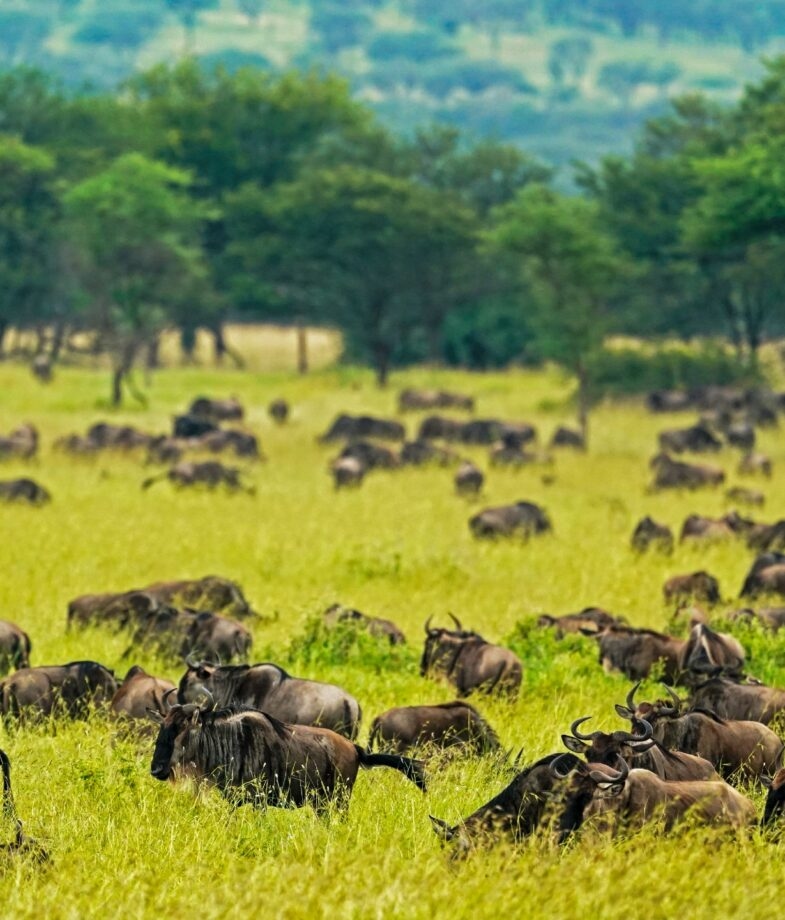
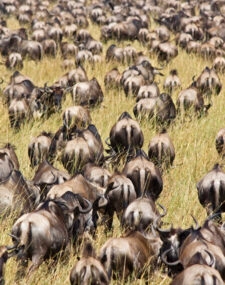
Approximately 1.5 million wildebeest take part in the Great Serengeti Migration every year. Around 400,000 of these wildebeest are born during the migration between January and March. There are other herds in the Serengeti National Park and Maasai Mara that do not migrate.
Around 250,000 wildebeest die each year. Many are killed by predators that follow the migrating animals or fall foul of crocodiles during river crossings. Others die from natural causes like thirst or exhaustion.
Why do the wildebeest migrate?
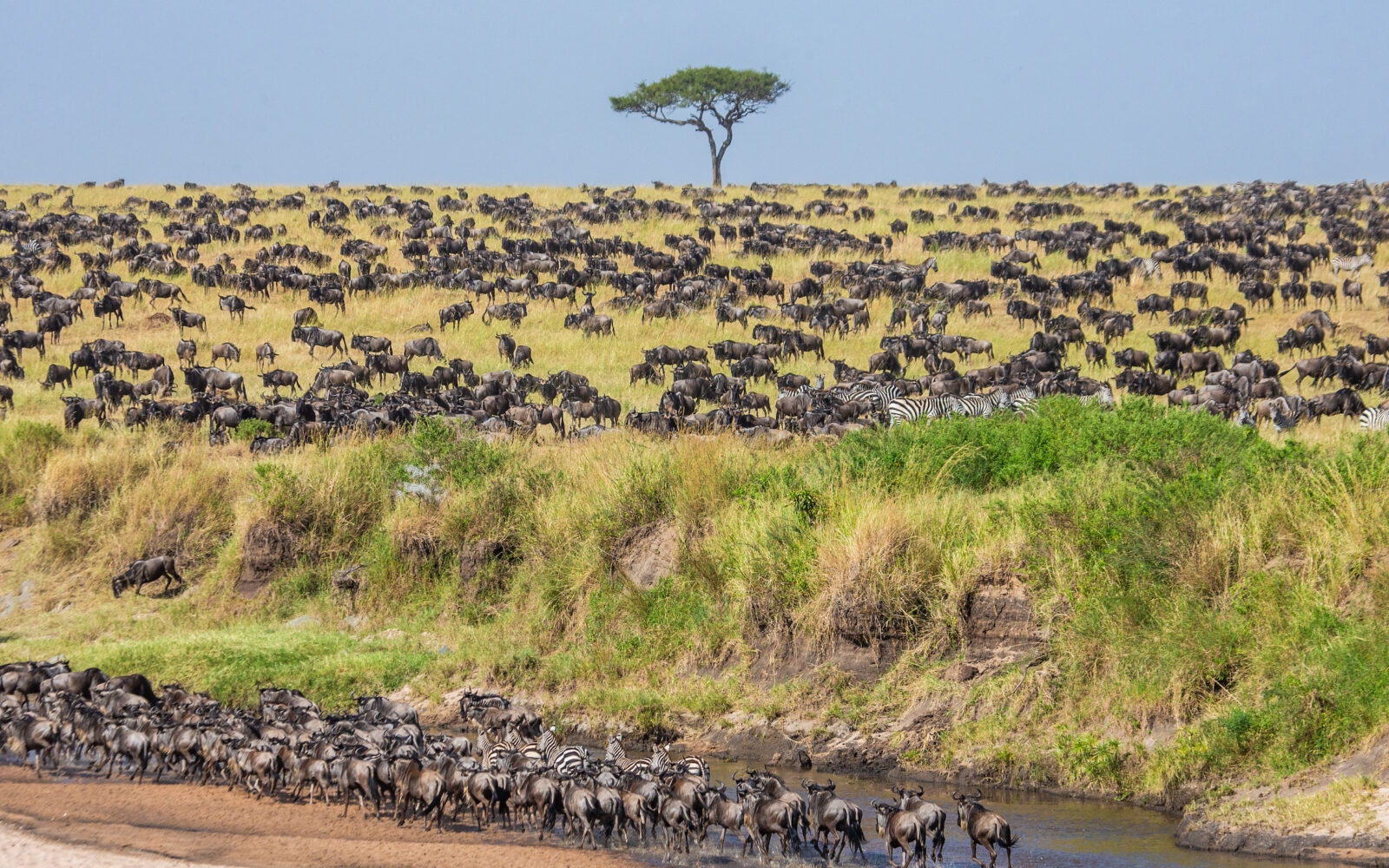
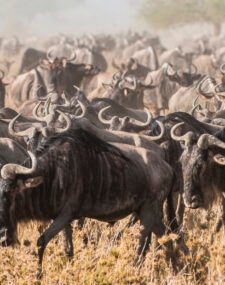
During the Great Serengeti Migration the wildebeest migrate to follow the rain. The herds move through the Serengeti-Mara ecosystem in search of water and fresh grass. As seasons change during the year they travel in a clockwise direction following the best grazing.
The approximate route of the Great Serengeti Migration is a 400-mile loop. The migrating wildebeest do not move in a linear way, however, and so many travel up to 1,500 miles during the year, sometimes even doubling back on themselves.
What animals can I see in the Great Migration?
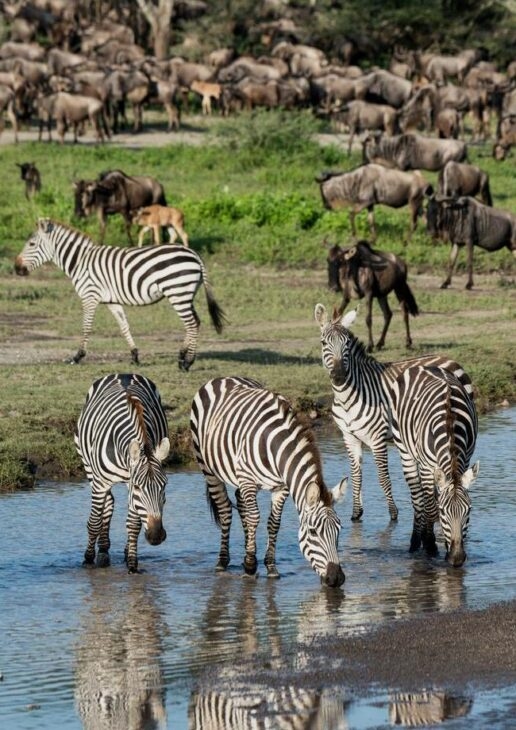
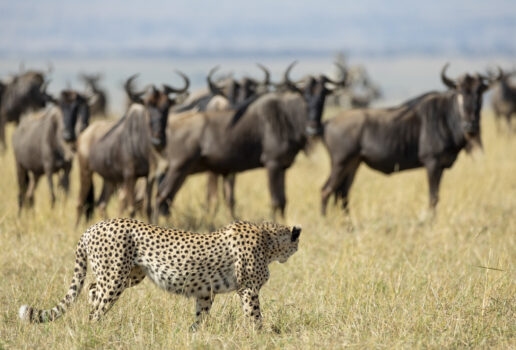
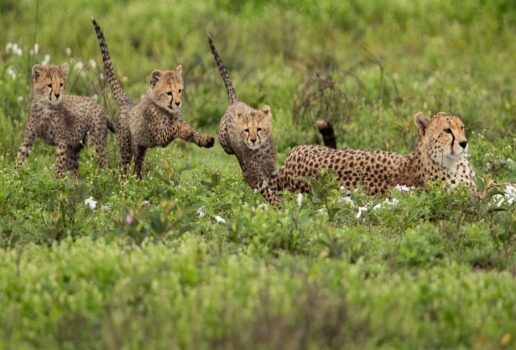
Approximately 1.5 million wildebeest, 400,000 zebras and 200,000 gazelles migrate each year. During the migration you can see Thomson’s gazelle, Grant’s gazelle and other antelopes. Predators to watch out for include lions, cheetahs, hyenas and of course, crocodiles.
Not all of the animals can be seen at once. Different species prefer slightly different grazing conditions, so you can expect to find them at slightly different points on their route. The predators tend to be active at certain times of day, avoiding the full heat of the sun.
Where does the Great Migration take place?
Tanzania or Kenya: which is better for the Great Migration?
The Great Wildebeest Migration can be seen from both Kenya and Tanzania. The herds spend most of the year in Tanzania, but the Mara river crossings can be seen from both Tanzania’s Serengeti National Park and the Maasai Mara in Kenya.
In Tanzania, one of our favourite migration viewing spots is from the Lamai Wedge side of the river, which is less busy and more remote. We can suggest the best luxury camps in this area. Overall, your choice between countries depends on many factors. We’ll help you decide which would be best for you.
The Great Migration in Kenya
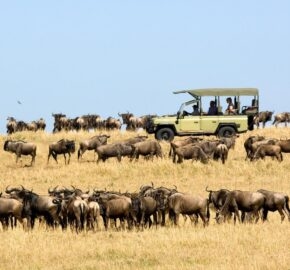
The Migration passes through Kenya’s Maasai Mara between August and October. It’s easily accessible from Nairobi and you are perfectly positioned to see the herds crossing the Mara River and to spot the Big Five (lions, buffalo, leopards, elephants and rhinos).
The Great Migration in Tanzania
The migrating herds spend most of the year in the Serengeti in Tanzania. From January to March the herds are in the south, near the Ngorongoro Conservation area. Here up to 400,000 calves are born before the herds head west and north towards the Mara River. On a Great Migration Safari in Tanzania you are likely to be further from the crowds.
Experiencing river crossings during the Great Migration
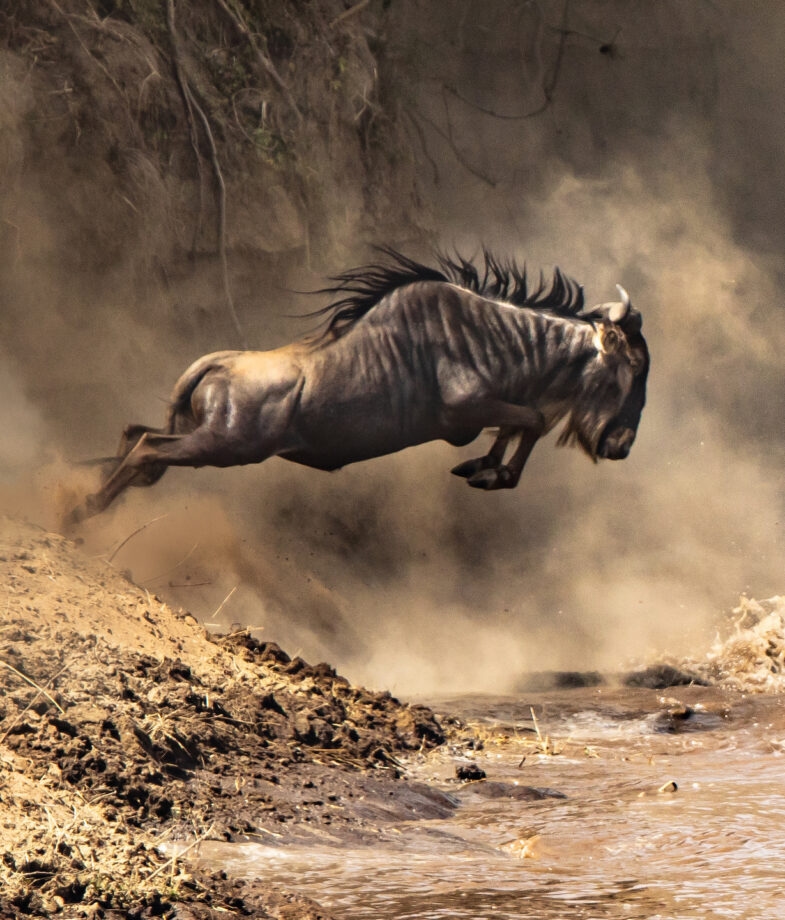
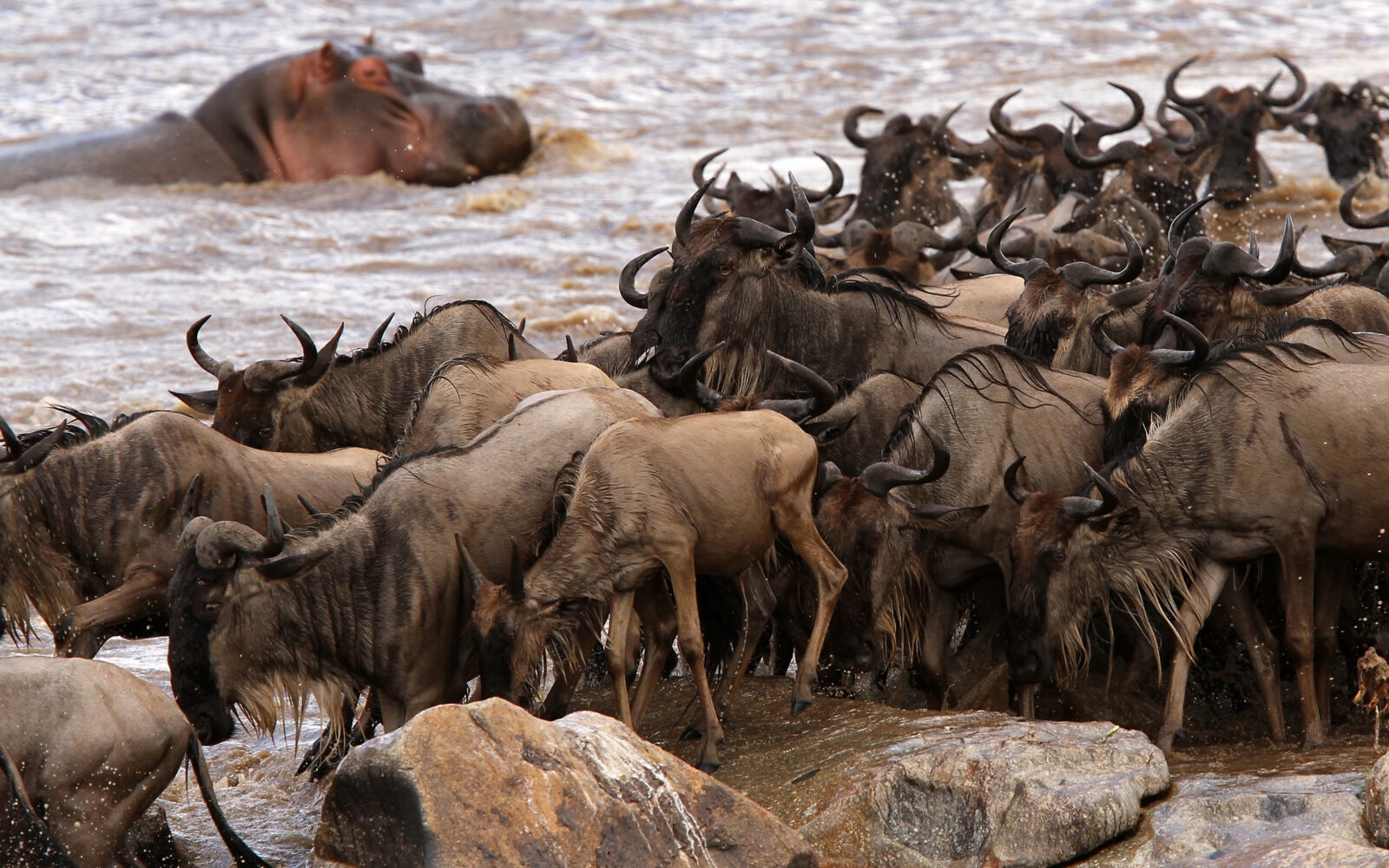
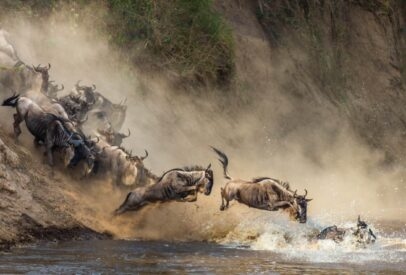
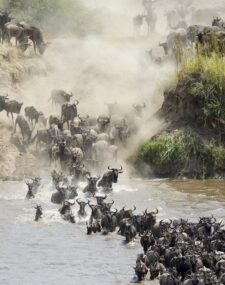
The sight of thousands of animals crashing through the waters of the Mara River is, for many, what the Great Wildebeest Migration is all about. To get to the fertile ground on the other side they must avoid the jaws of the waiting crocodiles.
River crossings are an incredible sight, and extremely popular, so they can often be marred by over-crowding. Our experienced team has the expertise to introduce you to locations and guides that ensure this busy time is approached in a way that is respectful to the animals and the environment. All this, while still giving you the best chances of witnessing this difficult to predict phenomenon.
Mara River crossings
Many of the most dramatic river crossings during the Great Migration take place across the Mara River in both Kenya and Tanzania, usually between August and October. There are several known crossing points where animals team down the craggy banks and forge across the rushing water. Our expert team can help you choose the best camp for possible river crossing sightings without adding to over-crowding.
Grumeti River crossings
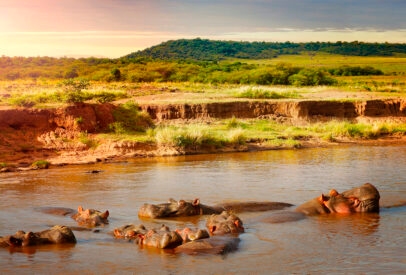
Apart from the Mara River, the wildebeest herds also cross the Grumeti River in Tanzania. These crossings are phenomenal to watch, as the river has a large population of Nile crocodiles. Depending on the timing of your trip this may be a good option, so speak to our team today to start planning.
Our favourite Great Migration trips
July to September in Tanzania and Kenya is a very busy time of year with overcrowding at some of the main river crossing areas. It is vital to speak to our experts when planning your trip, to find the best locations to visit and places to stay, that offer you both an excellent experience and align with out positive impact commitments.
When is the Great Wildebeest Migration?
The Great Serengeti Migration is a continuous pattern that progresses throughout the year. Around 400,000 wildebeest are born at the start of the year, with up to 8000 born daily during February.
The herds then move north, crossing the Mara River with the best time to see the Great Migration river crossings being from August to October, before returning south to the plains. There is no guarantee of seeing a river crossing. Even if you arrive at Mara River as the herds gather on the bank they might linger for a couple of days before the first wildebeest leaps.
The Great Migration: month by month
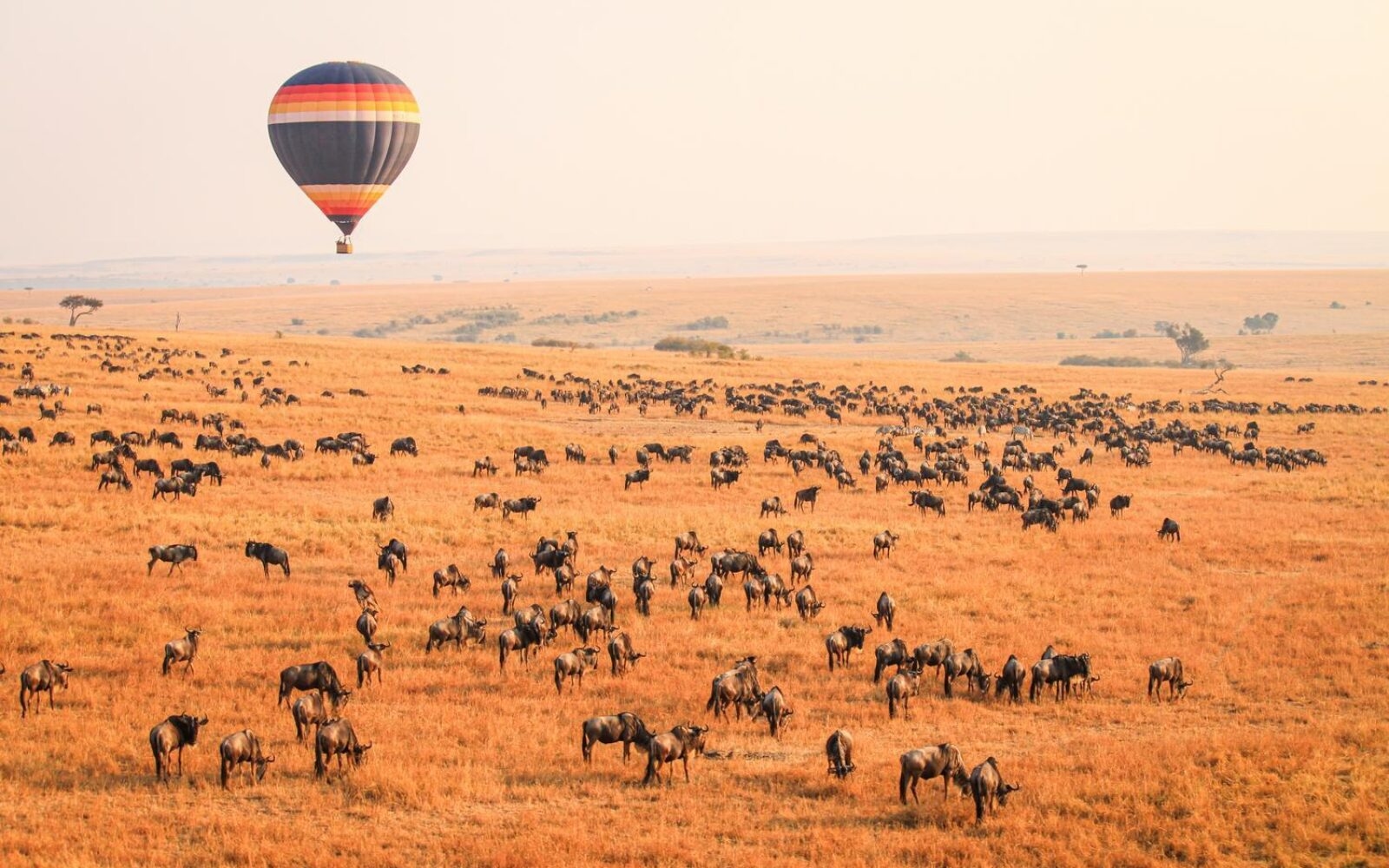
The Great Migration is a true representation of the circle of life. The cycle continues throughout the year as the herds follow the rains in search of food, water and a safe place to give birth. What you can expect to see varies month by month.
The Great Wildebeest Migration in January, February and March
During the ‘greed season’ of January, February and March the migrating herds congregate in the Serengeti, where around 400,000 wildebeest are born each year. During peak birthing season in February several thousand calves are born each day. The short nutrient-rich grass keeps them safe from predators.
The Great Migration in April and May
By April and May the ‘long rains’ begin and the Great Migration is on the move. The grass has begun to dry out and the herds start to travel west and north. They move through the longer grass and towards the Ndoha and Dutwa Plains.
The Great Migration in June and July
In June and July the herds are heading north through the Grumeti Private Reserve towards the Maasai Mara, where it is starting to rain. During these months you can see the Grumeti River crossings, the first for the youngest members of the herd.

The Great Migration in August, September and October
From August until October is when most Mara river crossings take place and is the peak season for migration safaris. Many of the herds cross the border from Tanzania and into Kenya’s Maasai Mara National Park. They face threats from crocodiles, lions – and people.
The Great Migration in November and December
As the year comes to a close, the wildebeest, zebras and antelope start to move south and curve back into Tanzania, once again following the rain. They head to the area around Ngorongoro and prepare to begin the cycle all over again with birthing season.
Where can I stay to see the Great Migration?
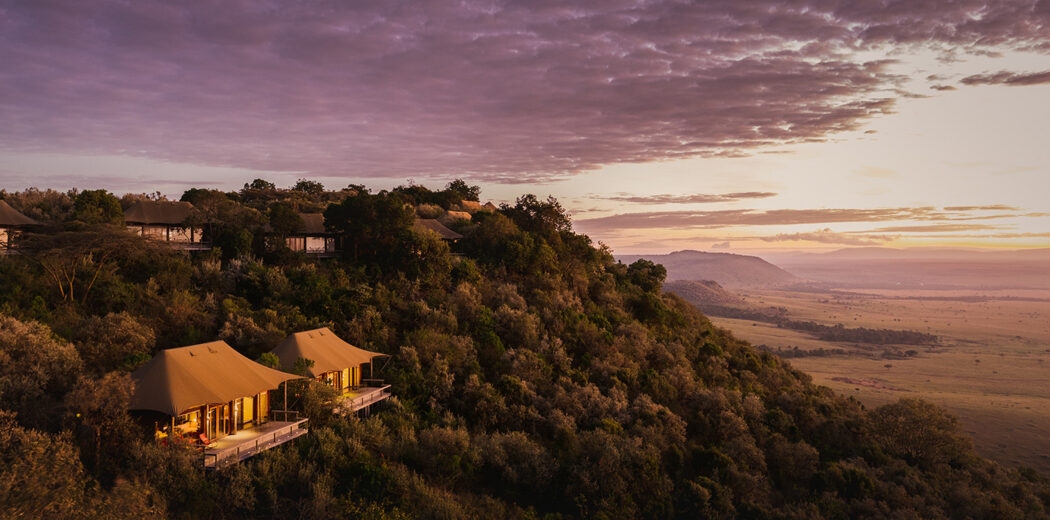
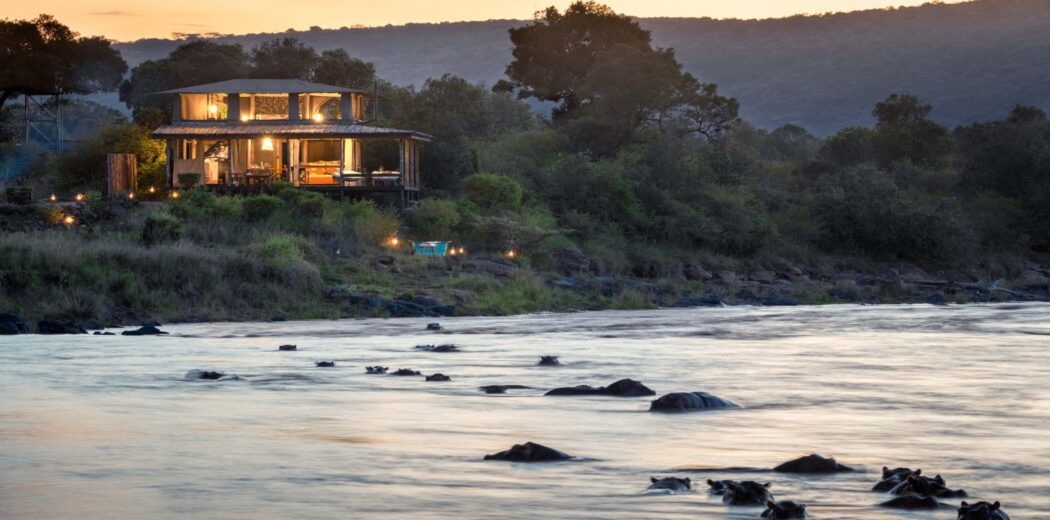
There are a variety of options in both Tanzania and Kenya. In Kenya, the Maasai Mara is easily accessible from Nairobi and there are many luxury permanent camps near the Mara River. In more remote Tanzania seasonal camps are a fantastic option.
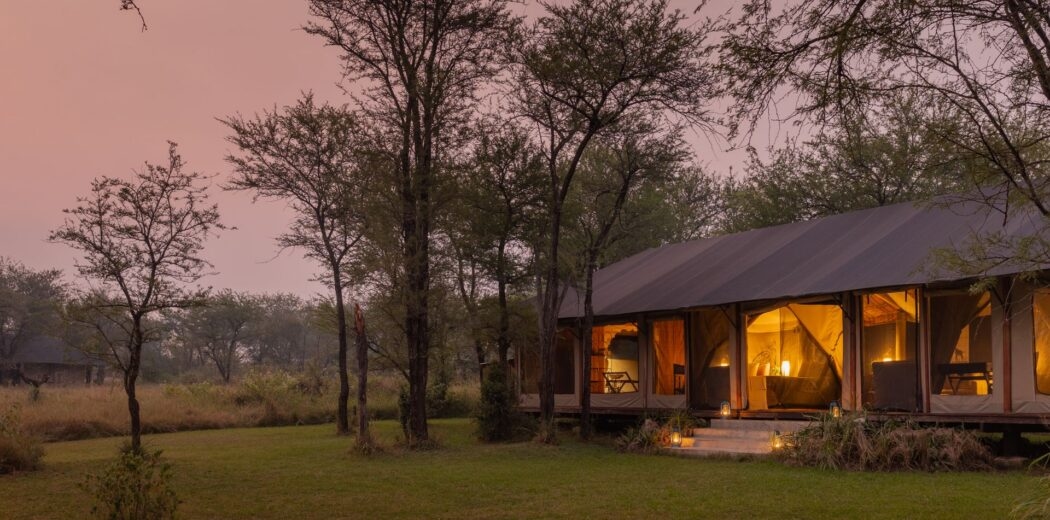
You have a choice between permanent and seasonal or ‘mobile’ camps. Seasonal camps move between different locations throughout the year, following the pattern of the migration. These camps have no permanent buildings but can still be incredibly luxurious.
Because seasonal camps are not permanent structures, they are often best placed to catch the action. We recommend booking into one for at least part of your safari, to see the migration up close and experience the magic of a more ‘traditional’ safari.



Ready to start planning?
Embark on the journey of a lifetime with a safari unlike any other. The spectacle of the Great Migration offers an unforgettable adventure through Kenya or Tanzania. Witness the diverse wildlife of the Maasai Mara and explore the serene expanses of the Serengeti.